Tag Archives: Italy

4-Oct Field trip to Parco Archeologico

On the afternoon of Saturday 4-Oct Jessie & John joined the rest of the Earthwatch volunteers on a tour of Parco Archeologico near Populonia guided by our project director, Dr Carolina Megale.  The park, know formally as “Parco Archeologico di Baratti e Populonia”,  is close to the beach which rings the Baratti Bay.

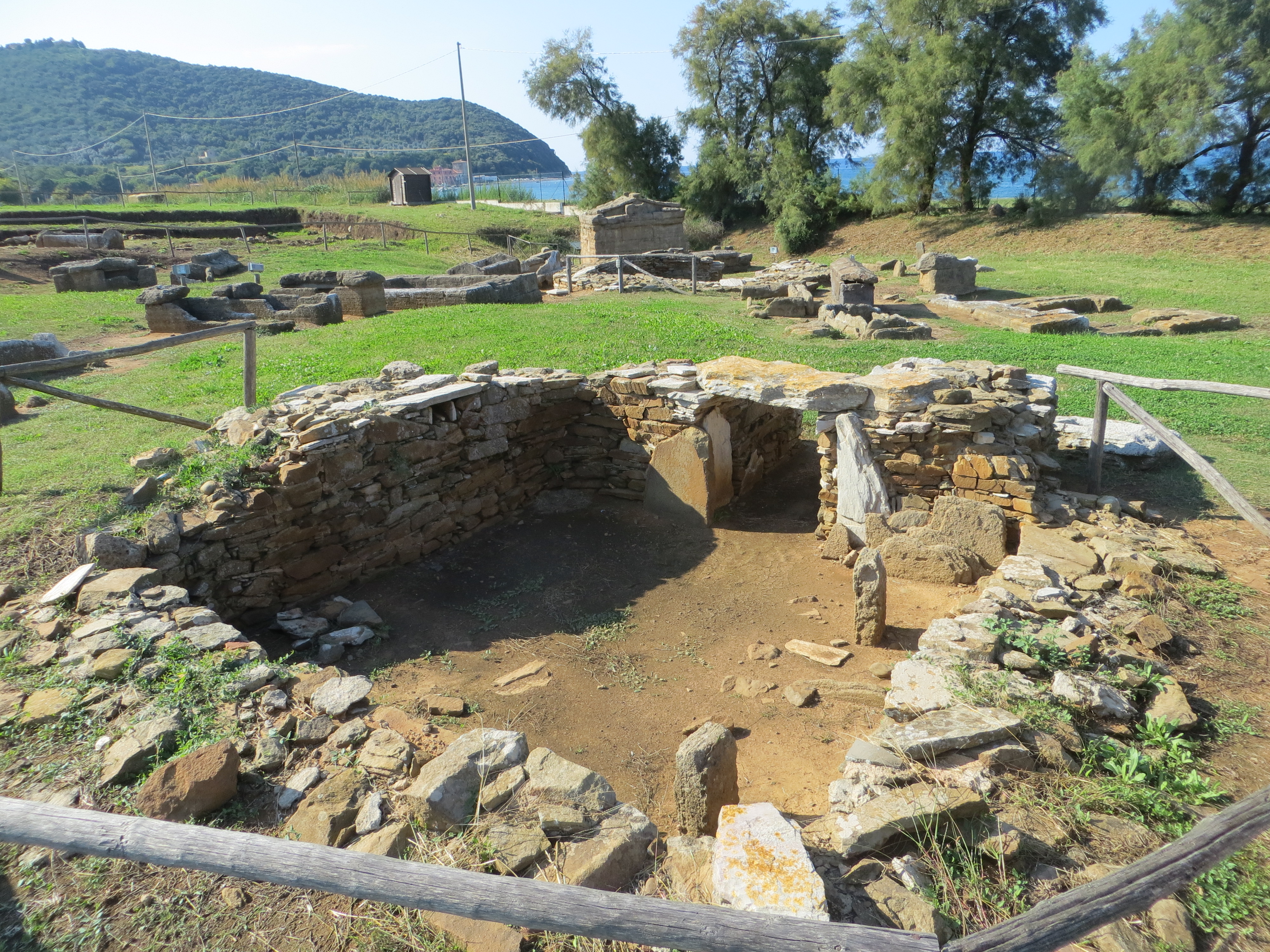
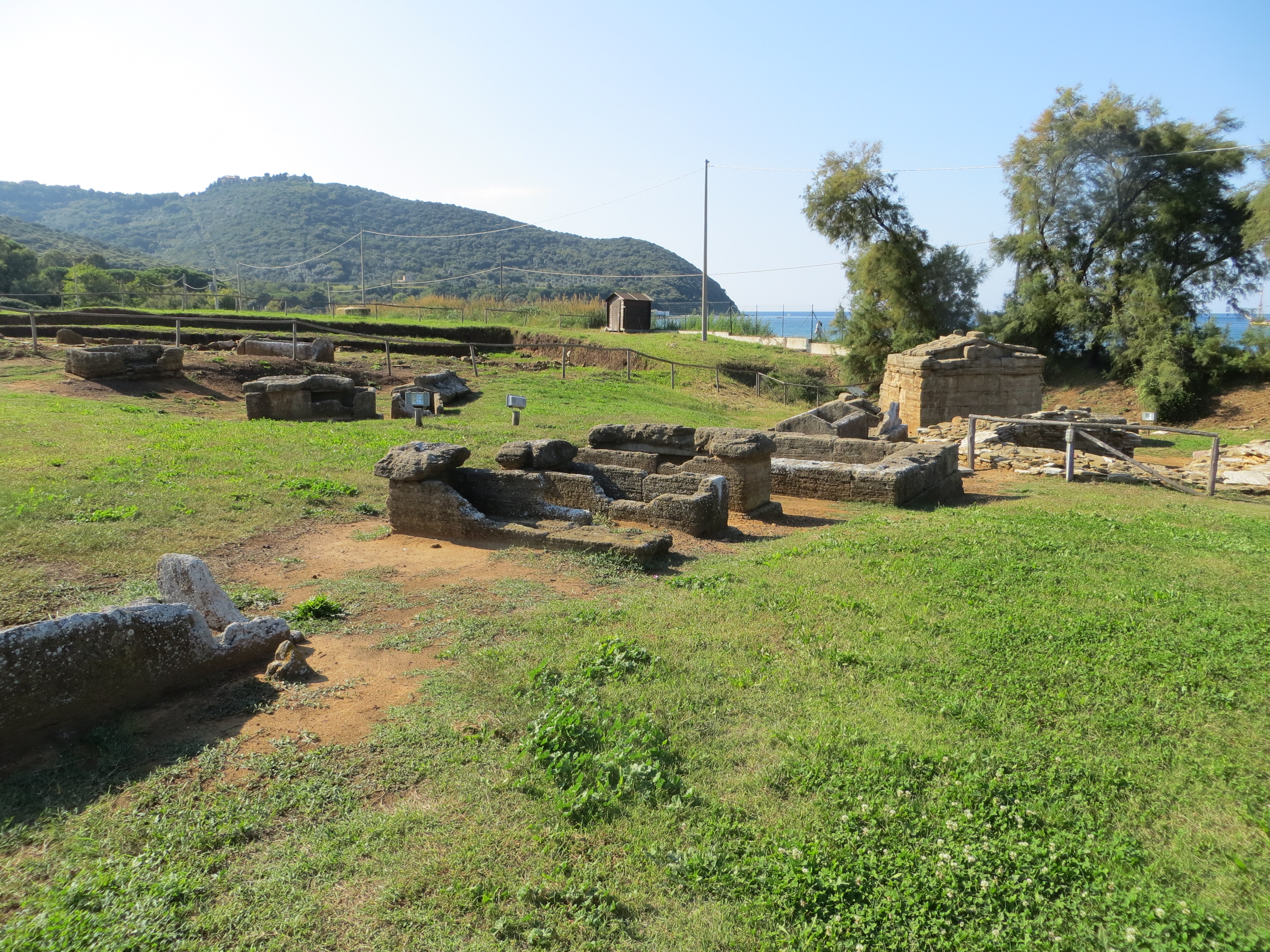
This park covers a vast necropolis of tombs dating from the 7th to 3rd centuries BCE. It was rediscovered in the early 1900’s as the iron slag that had covered it was removed for reprocessing.

Europe_2014 10 04_1321

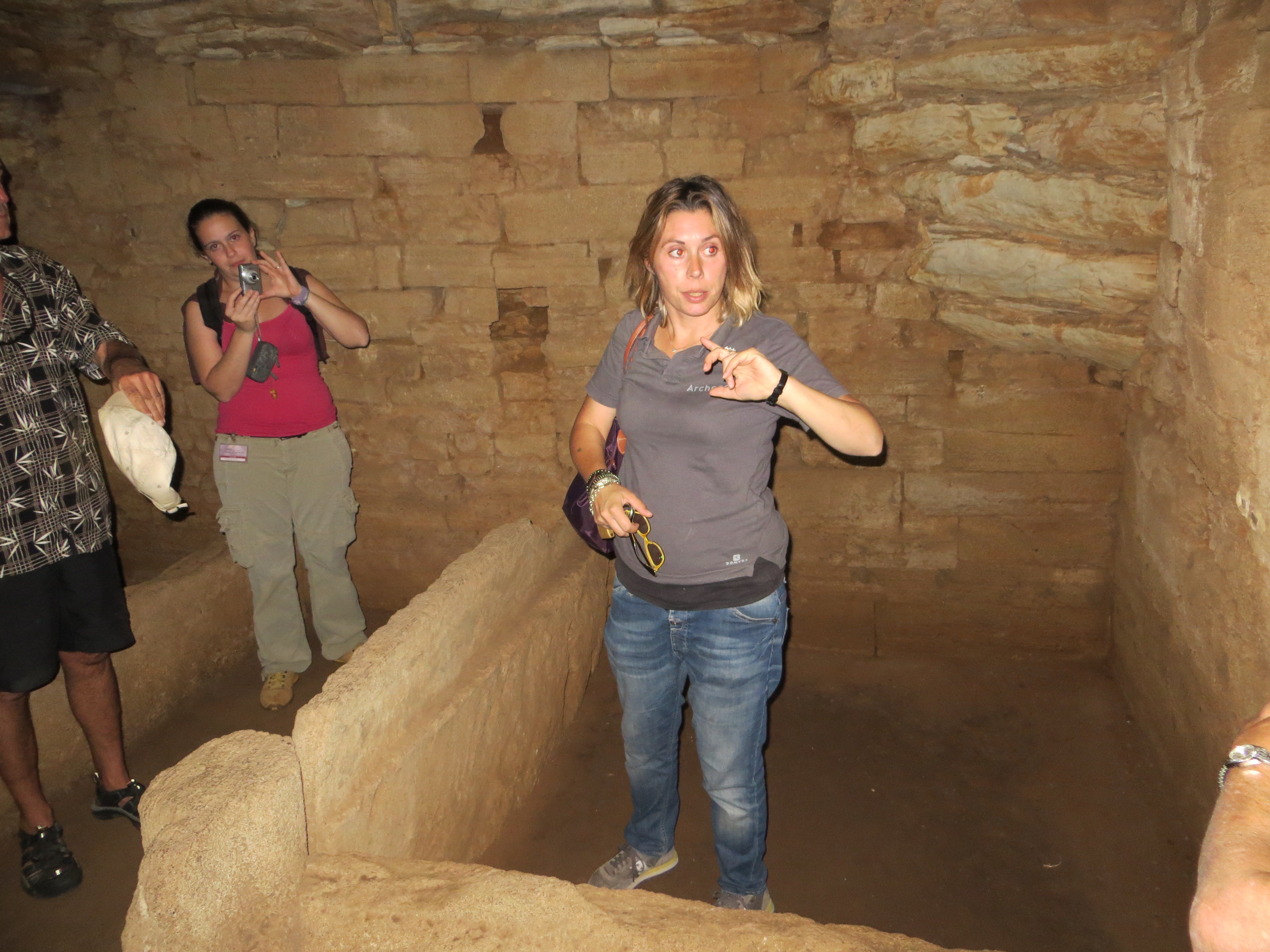
Dr Carolina Megale as tour guide at Parco Archeoligco in Populonia Italy

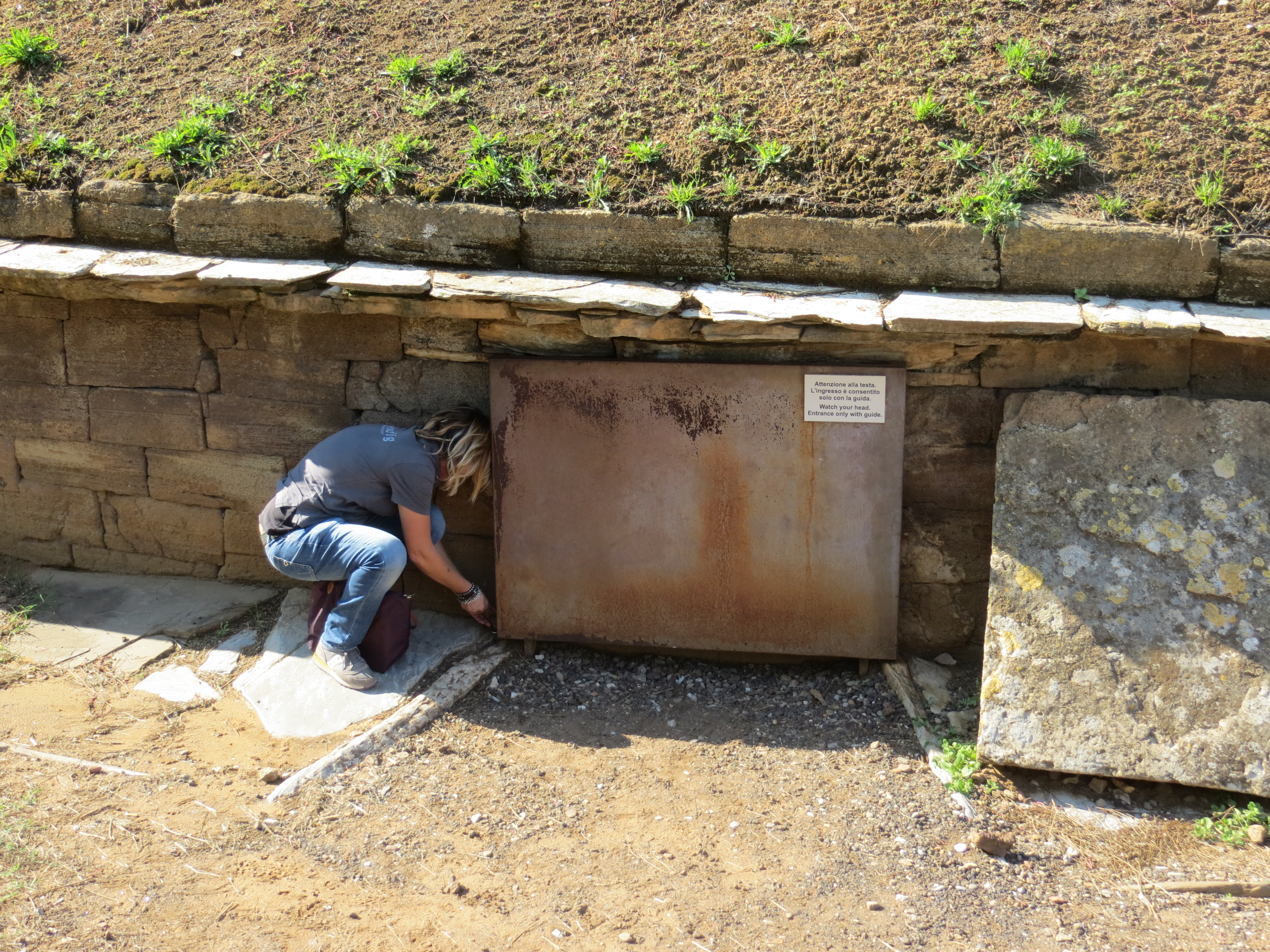
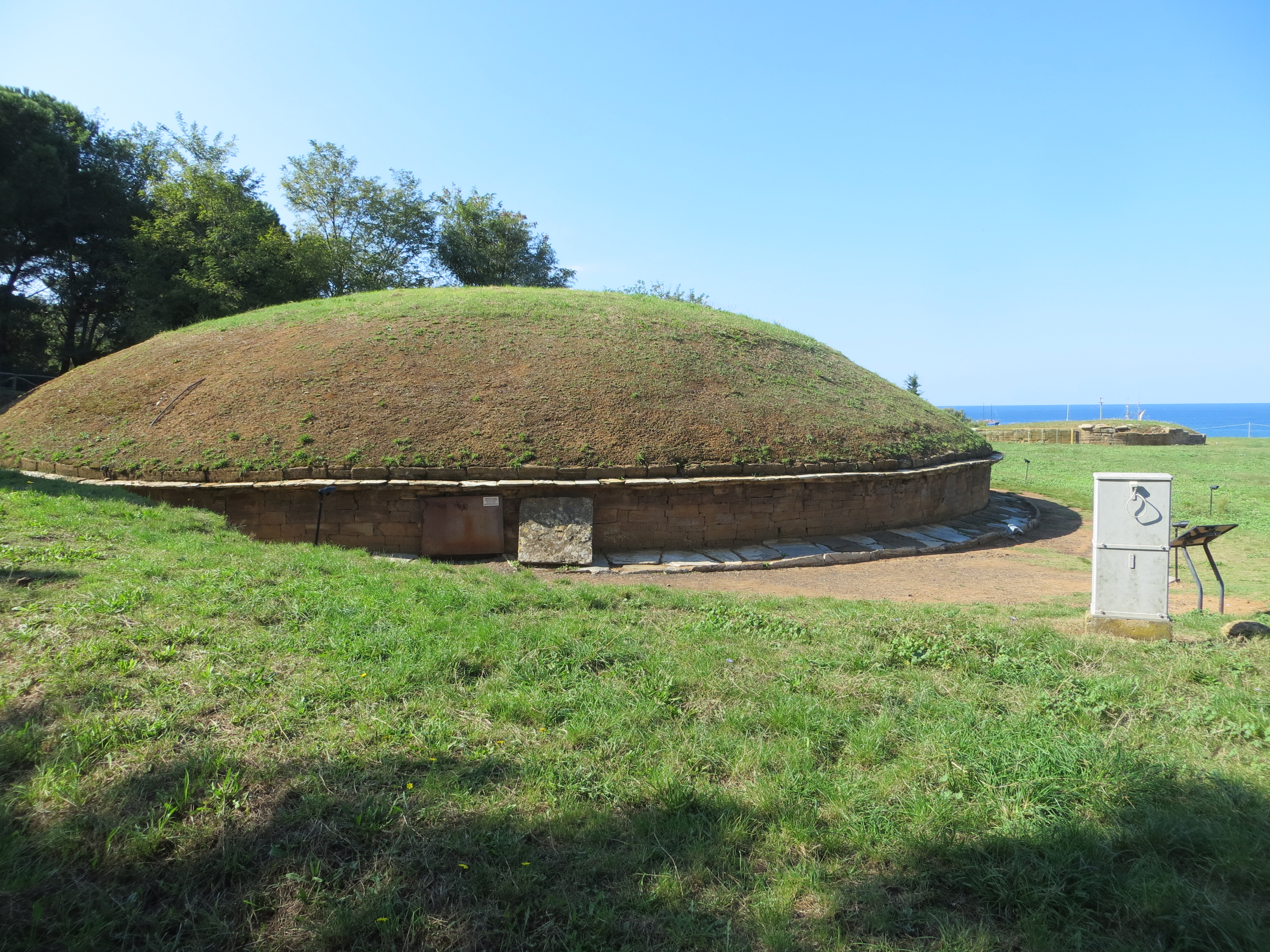
The first and largest  tomb in the San Cerbone necropolis is called “Tomba dei Carri”.  This oval ‘Tumulus type’ dome is listed at 30 metres in diameter, and looked maybe 7m high.  [Guidebook: from “Orientalizing Period  (7th century BC)”.]  It had about a 5′ wall around its base with a narrow access doorway about 3′ high that was locked behind a heavy vault door.  And Dr Carolina Megale had the key to the vault.

With the door pulled open & Carolina’s encouragement we crouched our way into the Tomba dei Carri and found a large squarish room in the center with a high conical roof (partially reconstructed).  I think that Carolina had turned on the interior lights.  There were some low partitions which might have been funeral beds.  In a side room of this tomb, when it was first uncovered, was found an intact chariot, now on display in a distant museum.  We didn’t see anything laying around but didn’t linger long inside those chambers.

Carolina led us around the entire section of the necropolis down to the smaller road-side Sarcophagus tombs of the 6th BCE.

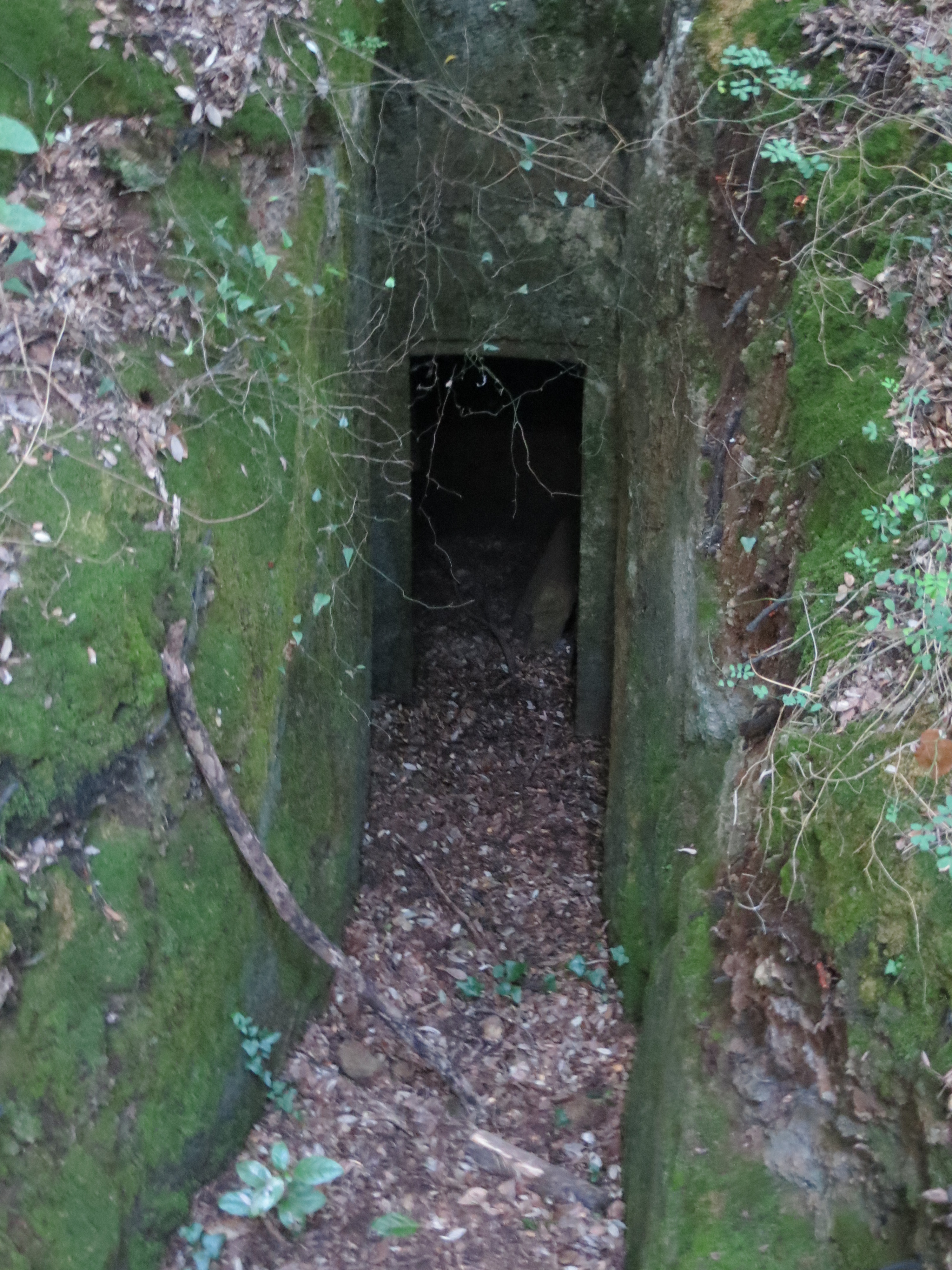
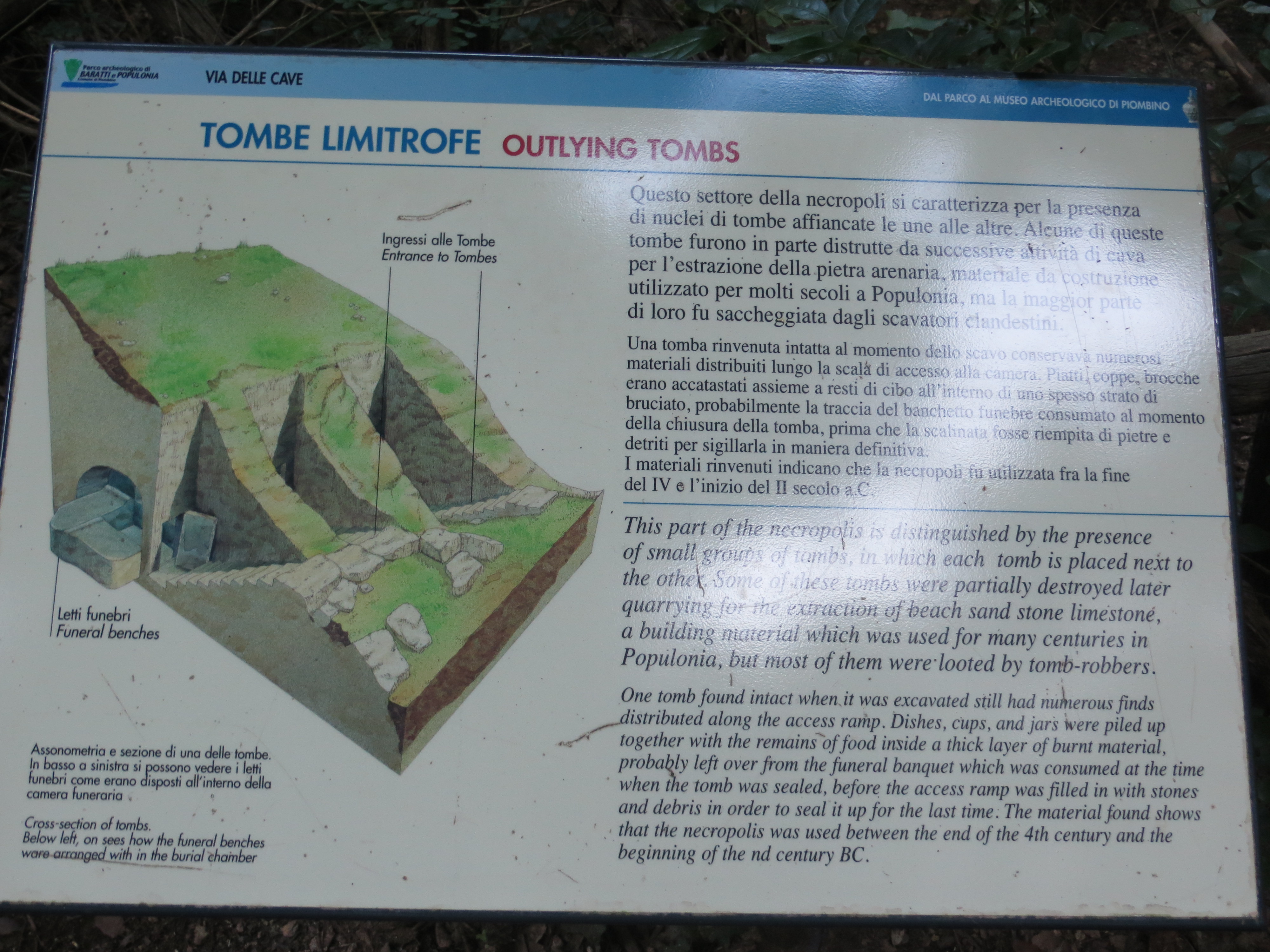
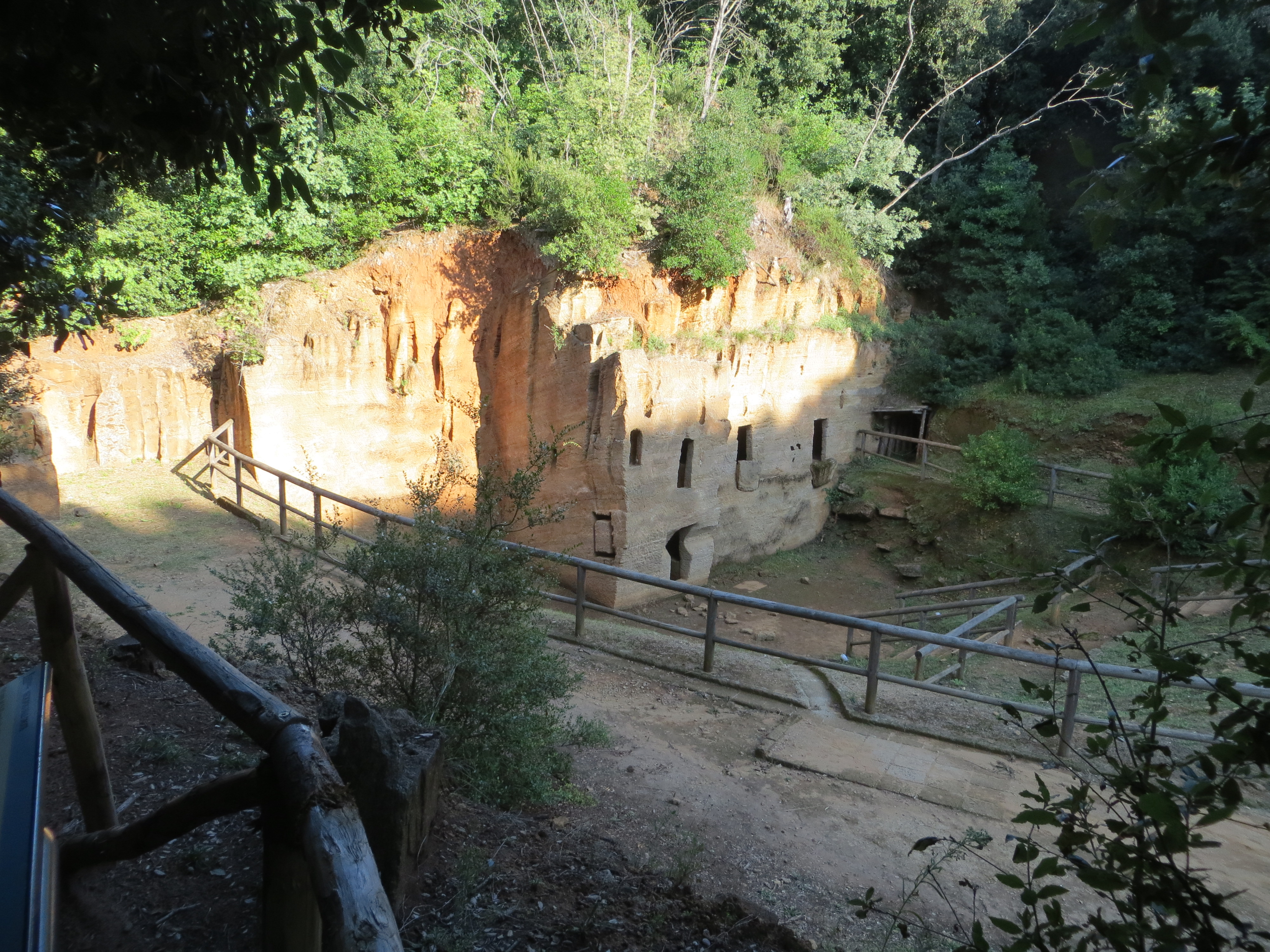
Then we headed up the hills to the Via delle Cave and the Cava delle Grotte.  These are tombs built into the sandstone hills and in the quarry.  It was a steep climb to these unique burial chambers.  High on the sloping hillside were dozens of narrow slots cut through solid rock leading to a small burial chamber.  On the other side of that hill were two levels of chambers cut into a quarry wall, like a townhome.

With a thorough dose of burial practices of these early Etruscans, we ate well that Saturday night back in Populonia Stazione.

Europe_2014 10 04_1322Europe_2014 10 04_1319Europe_2014 10 04_1328Europe_2014 10 04_1332Europe_2014 10 04_1335

Europe_2014 10 04_1348 Europe_2014 10 04_1350 Europe_2014 10 04_1375 Europe_2014 10 04_1363  Europe_2014 10 04_1374  Europe_2014 10 04_1365Europe_2014 10 04_1370

30-Sept – 8-Oct Earthwatch project photo sequence at Poggio del Molino

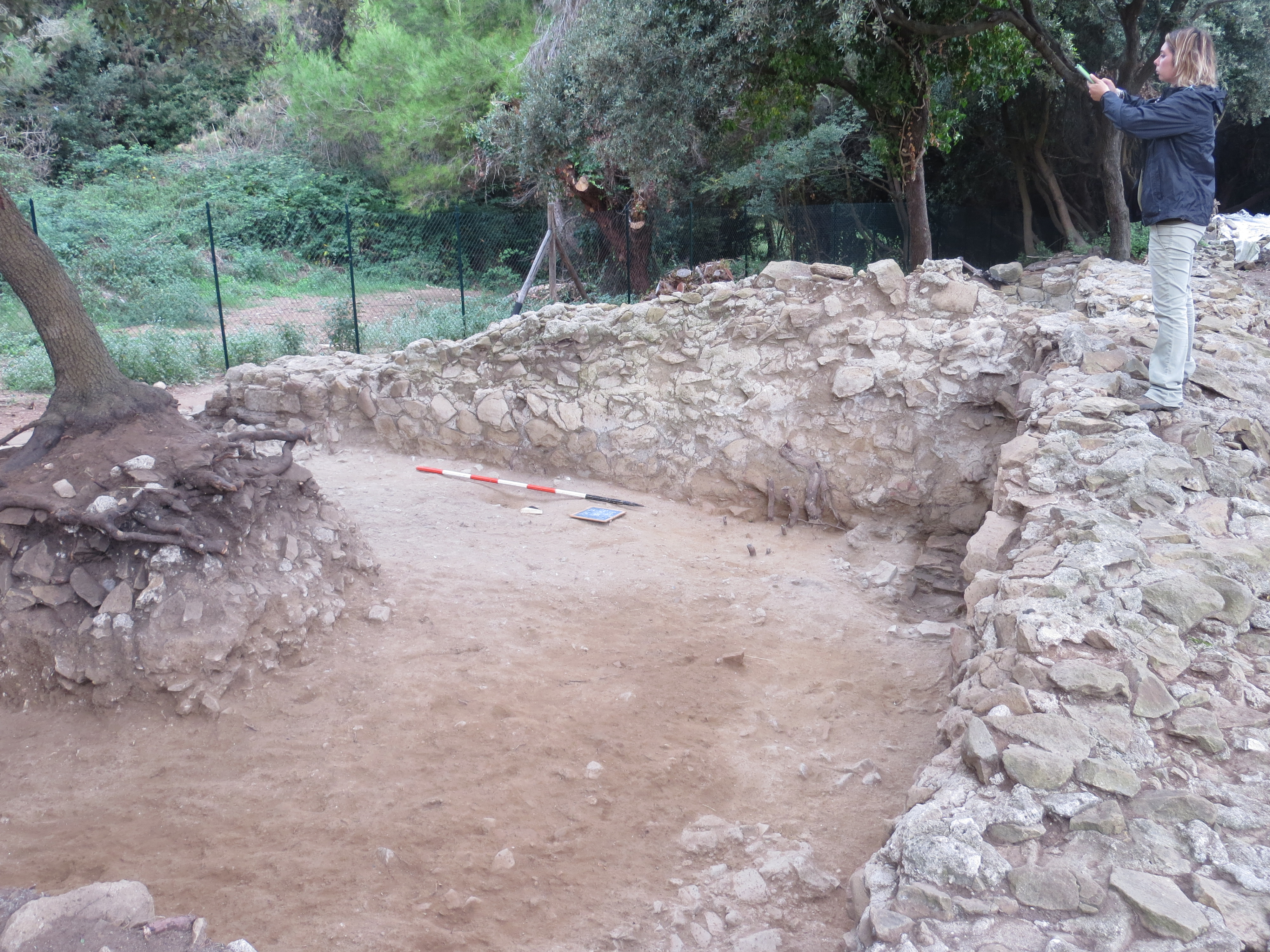
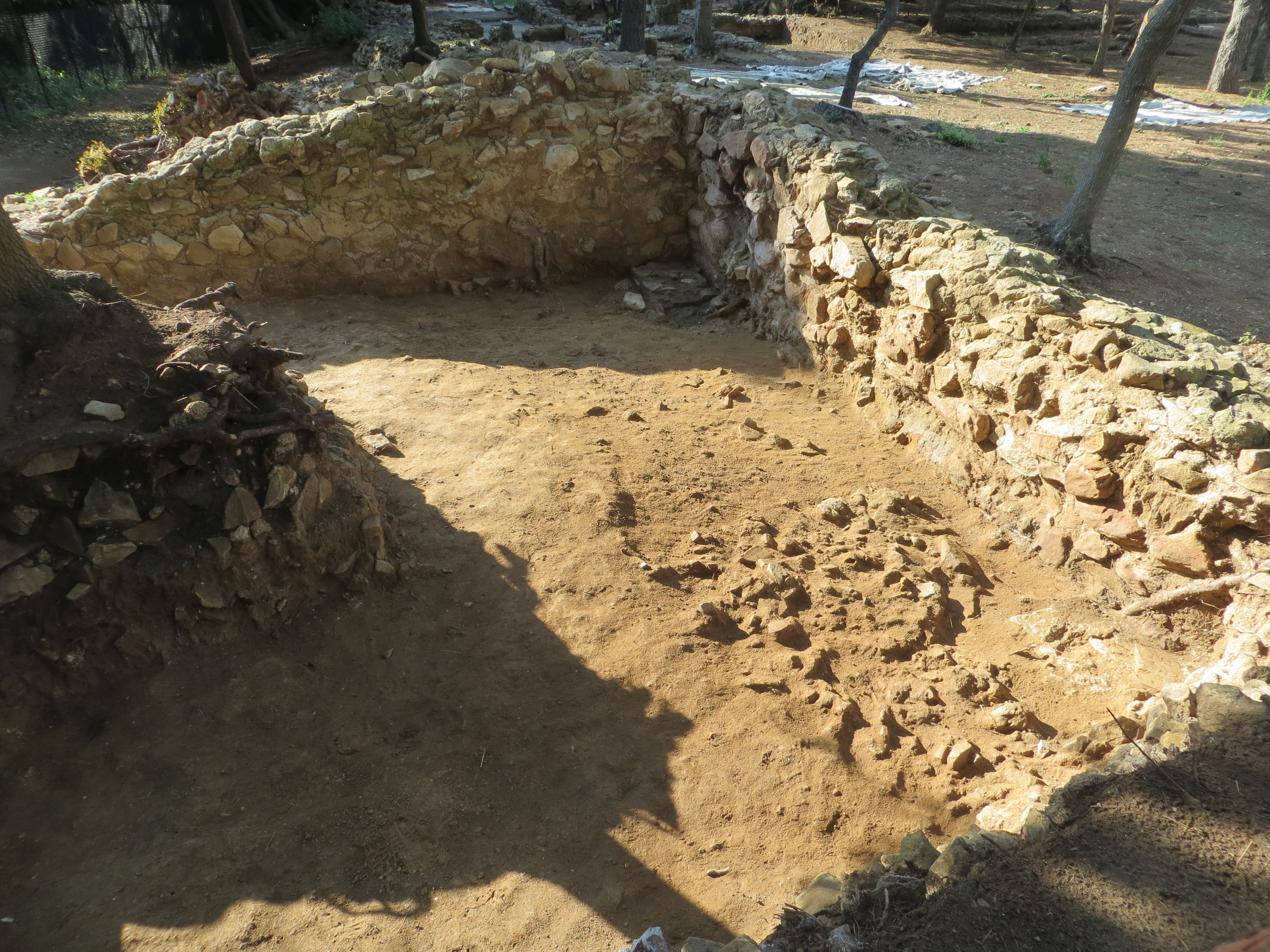
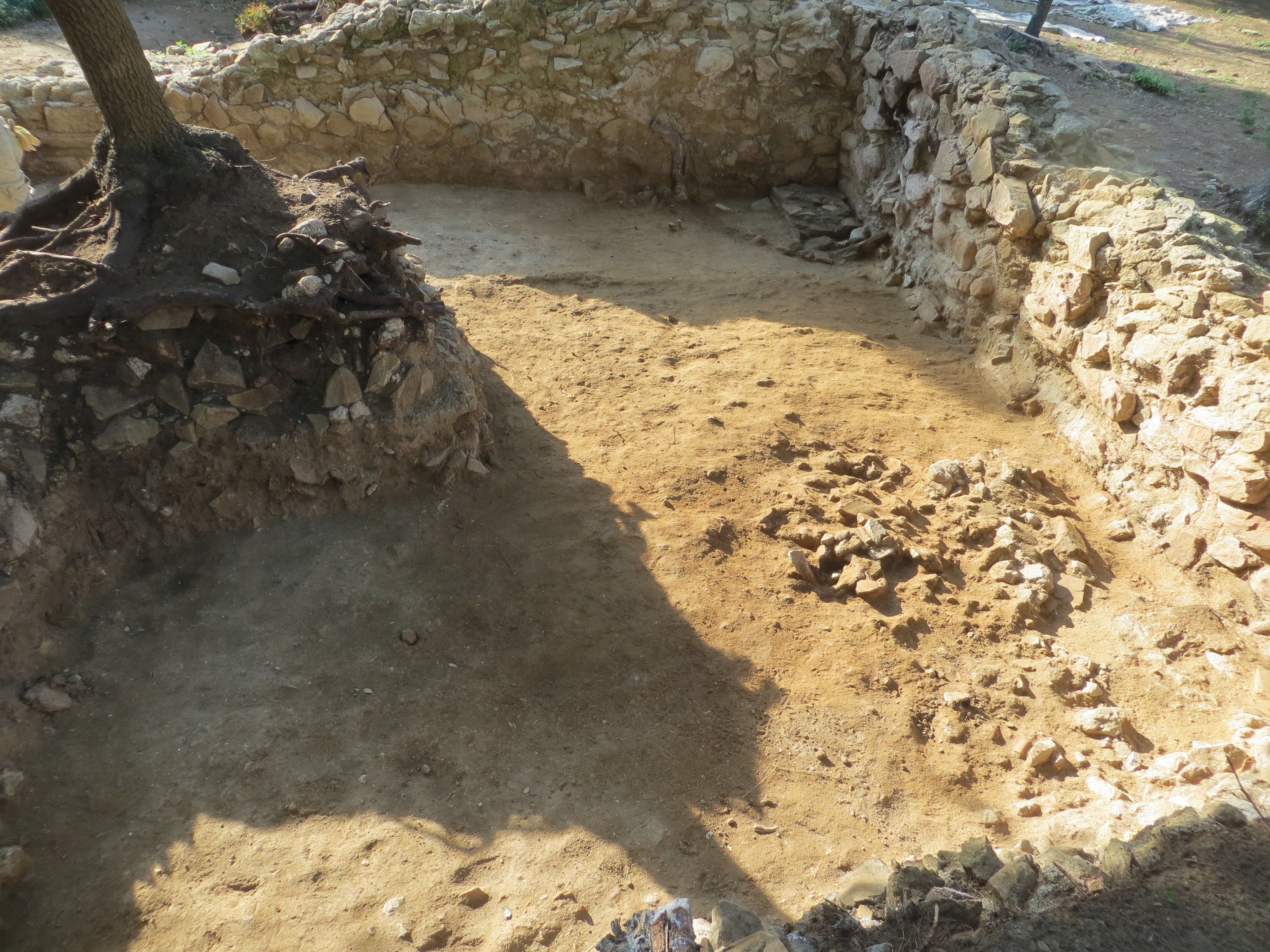
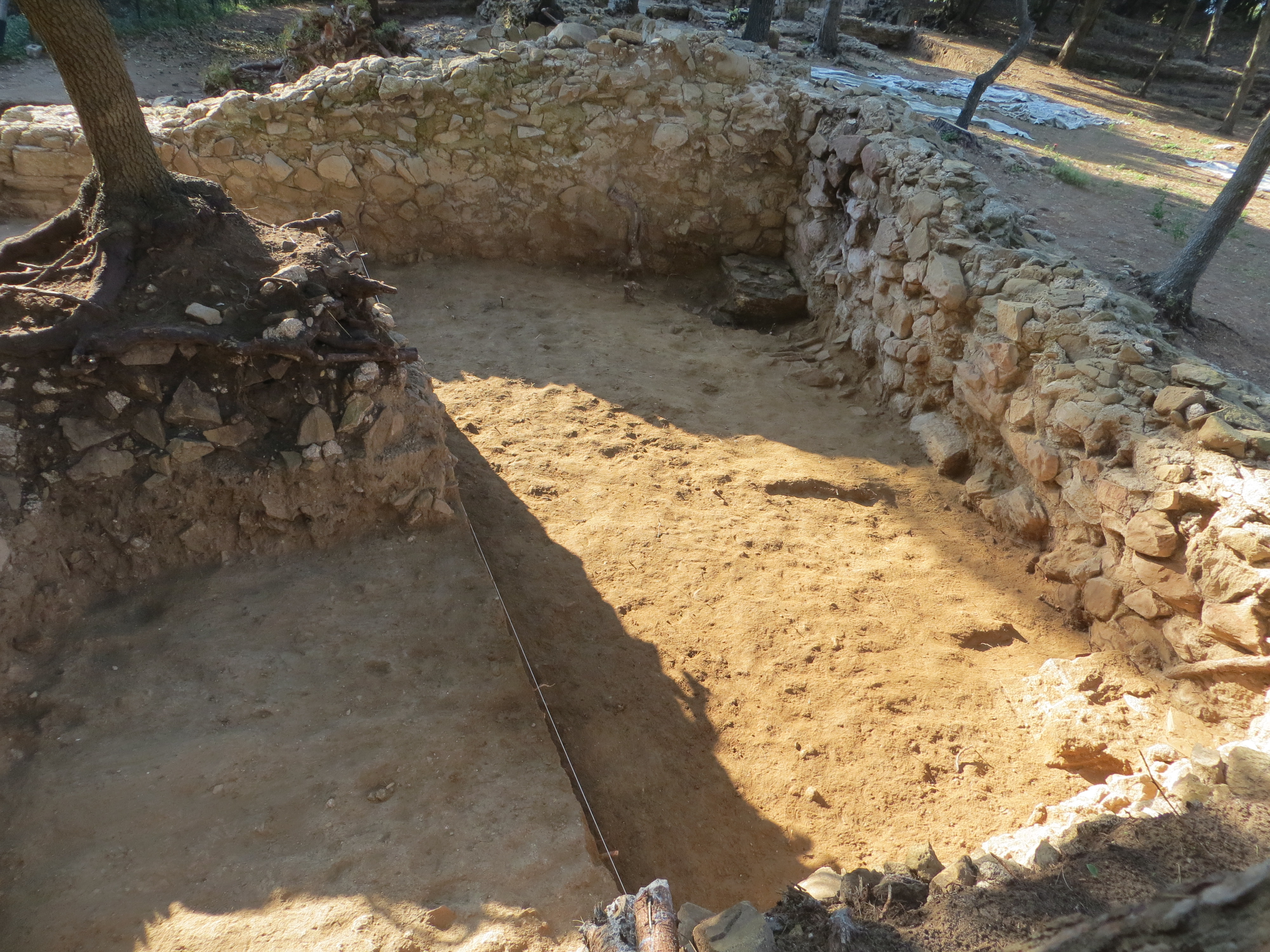
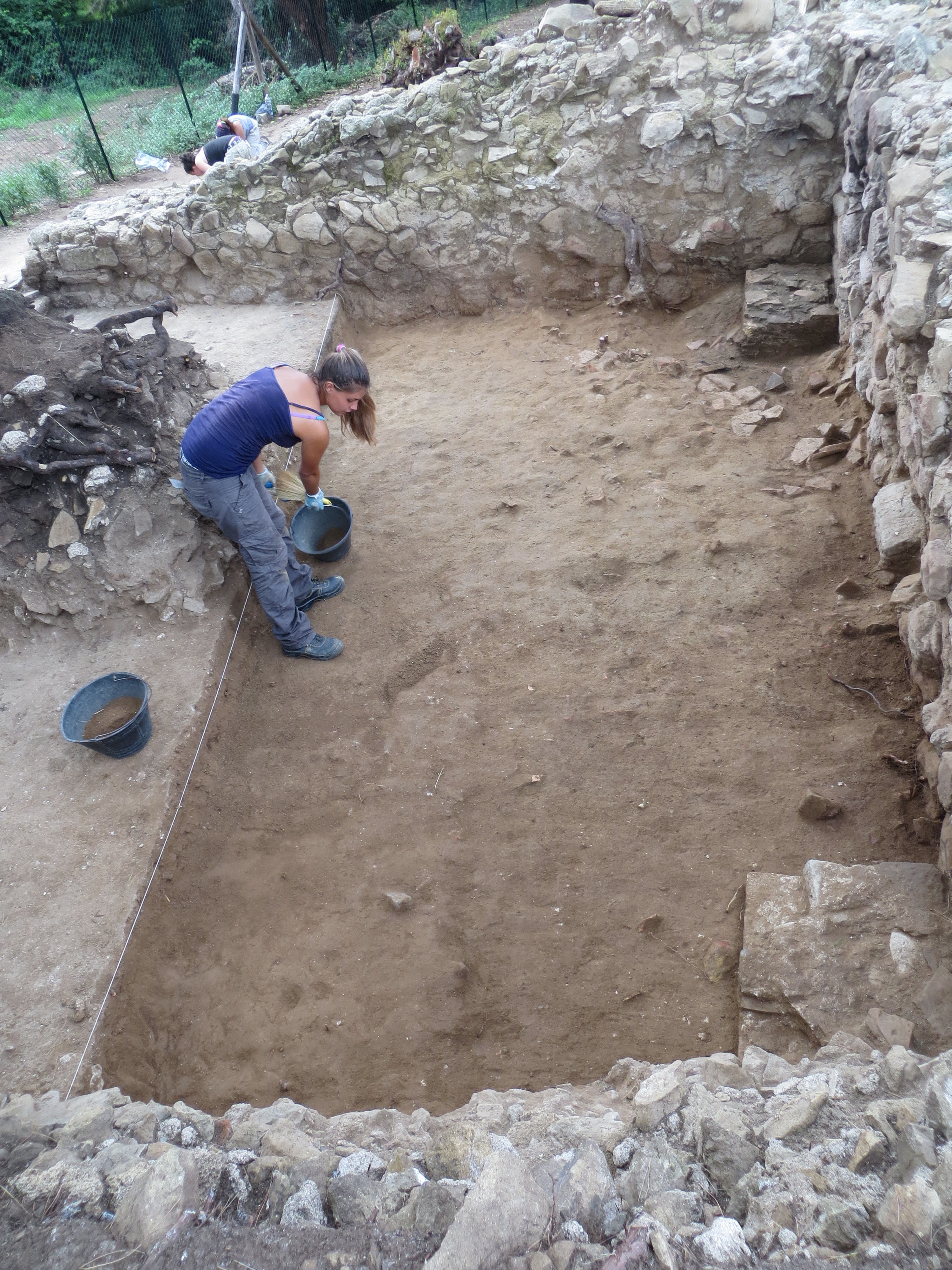
As we settled into the work at Poggio del Molino, John started taking pictures of a particular corner of our excavation area.  There were two adjacent excavations we were working on; the biggest one, Site A, uncovered the corner of two exterior walls.

Site A was approximately 20 ft wide so 3 & 4 people could work there side-by-side.  It was suspected to have been an outdoor shed with a tile roof.

Site B was nearby, but separate from Site A and much narrower and angled 90deg away.  At most two people could work this site.  This excavation exposed more of the base of one exterior wall that was thought to have been a tower. Site A was exposing another side of this tower.

John took pictures of Site A over our two week tenure, showing about 2 ft of  fill removed.

Supporting all this was the bucket brigade that sustained this fine steam of hand-swept, 2000-year-old debris.  A lot of it was loose sandy soil, but with rocks & tiles mixed in.  It was hauled by volunteers & staff, one bucket and wheelbarrow at a time, up an incline and onto an ever-growing dumpsite.  At best, the dump area separated the large blocks and tile fragments from the soil.  (Oddly, I only saw one worm through the whole two weeks.)  My guess is that we moved 2 to 3 tons of material up to the dumpsite.

The ground is carefully gathered by volunteers sweeping up loose soil and removing larger blocks one at a time.  Besides rocks, mostly it seemed we were picking up roof tile fragments.  Everything was inspected and interesting finds were passed up the chain of interest.  The most interesting finds wound up in a bag identified with the layer id we were excavating.

The excavation stopping points were the layers as determined by Dr Carolina Megale and her staff.  The layers were almost imperceptible color or texture changes in the soil.  At each layer documenting photos were taken by Dr Megale before we began the excavate again.  The layers were numbered and all interesting objects from that layer that were set aside were likewise identified.  Each layer was also documented with descriptive (English) narrative in a project workbook.

Europe_2014 09 30_1480

30-Sept One corner of Poggio del Molino, I call Site A. The far wall is one side of a former tower.

Europe_2014 09 30_1471

30-Sept Earthwatch volunteers loosening the soil

Europe_2014 10 01_1450

1-Oct Documenting a layer

Europe_2014 10 03_1381

3-Oct

Europe_2014 10 05_1262

5-Oct

Europe_2014 10 06_1251

6-Oct

Europe_2014 10 07_1236

7-Oct

Europe_2014 10 08_1218

8-Oct What have we learned? Dr Carolina Megale & Helga inspecting excavation results

Europe_2014 09 30_1480

Before

Europe_2014 10 08_1218

After

28 Sep – 10 Oct Earthwatch archeology in Tuscany

IMG_1813

Working the dig at Poggio del Molino near Piombino

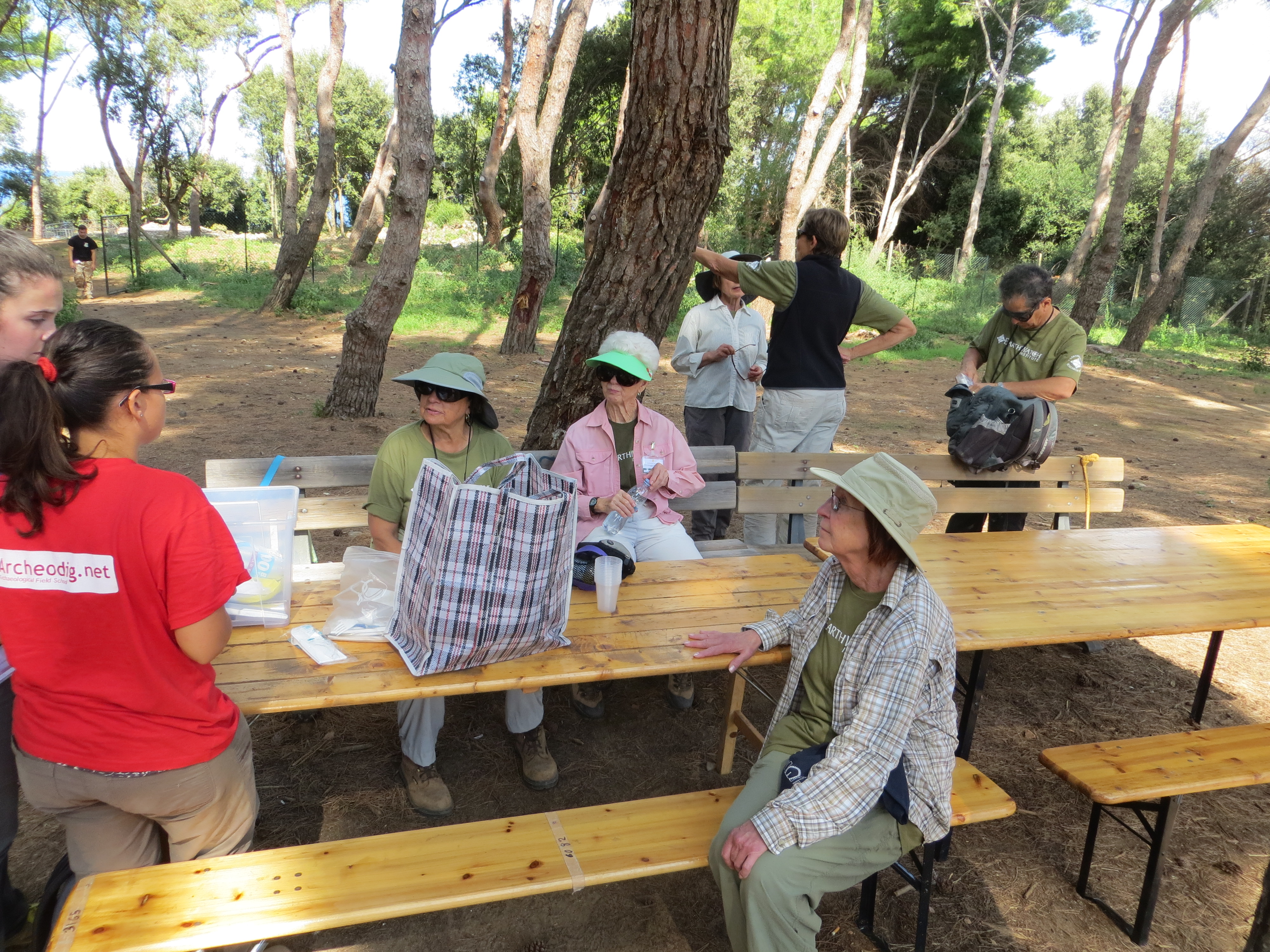
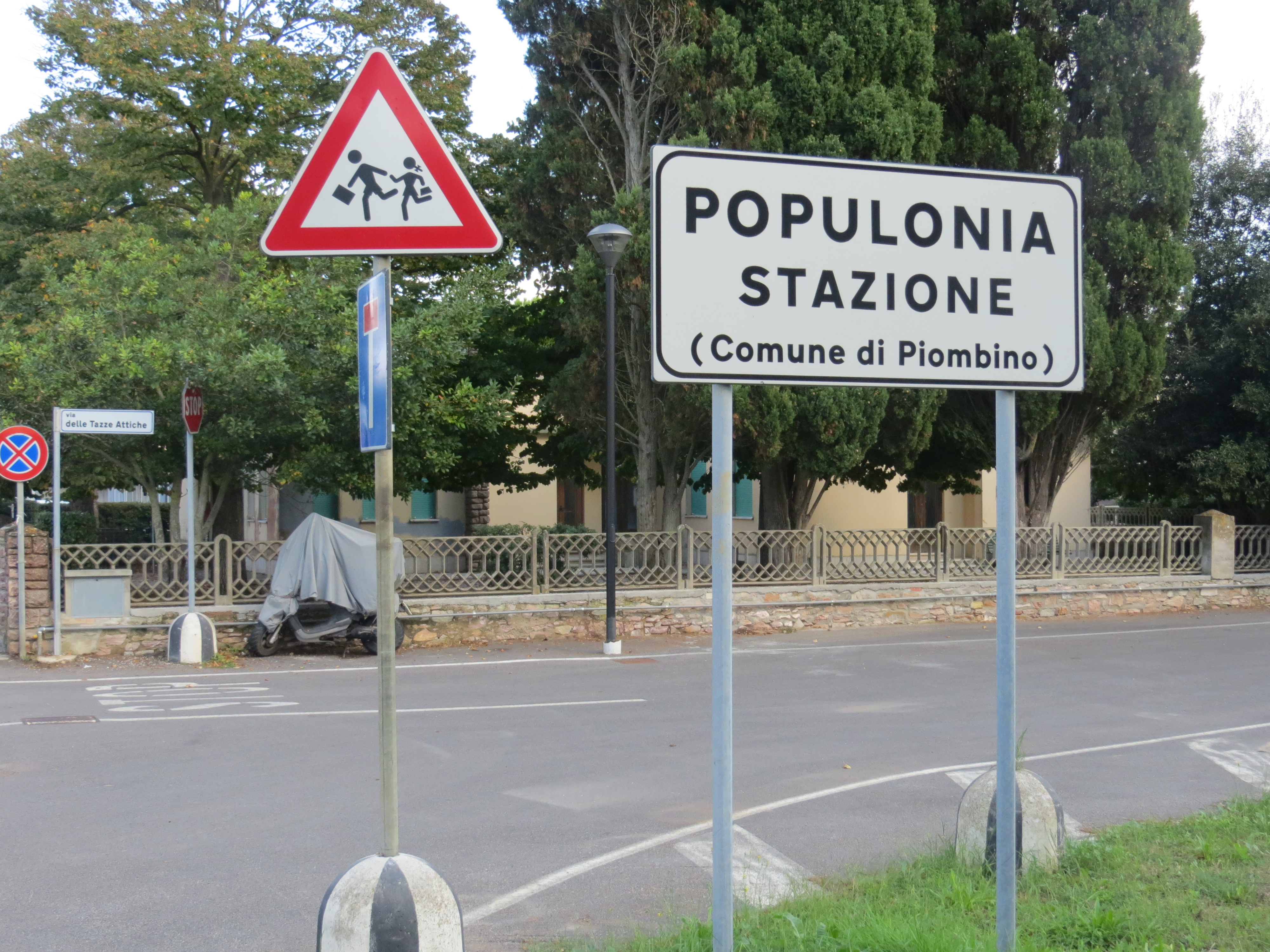
On Sunday 28-Sept we took the mid-day train south from Pisa to be met at the railroad station in Campiglia Marittima by the Earthwatch project staff members who transported us to our condo-like home — for the next two weeks — in Popolonia Stazione, near Piombino Italy.

We shared the two-story apartment with two other couples and had an upstairs bedroom. Each workday we were transported to the near-by project site at Poggio del Molino. We each made our own breakfast (John made cheese omelets) and the project provided requested breakfast ingredients for the apartment’s kitchen.  We provided the essential wine & beer.

The project was unearthing a settlement at Poggio del Molino, on Italy’s west coast next to the Tyrrhenian Sea (or could be the Ligurian Sea?), which might have been in existence since about the 7th century BCE as an Etruscan fort, then a farmhouse, then a Roman villa.  The site consisted of wall foundations outlining rooms for the owners, staff and various activities like steam baths & producing fish oil.  The area was prosperous due to local mining and iron mining on near-by Isola d’Elba.

Initially we found the worksite labor much harder than anticipated and we were thoroughly exhausted by the end of the day.  The weather was warm, even hot.  Fortunately we got rain on the 3rd day which precluded more digging until the ground dried out.  For two days we did some alternative projects, including sorting through the Roman-era bones found on a construction site in an urn. This respite helped restore our strength and enabled us to return to the dig with renewed energy.

The workday started at 8:45am.  A mid-morning snack and lunch were provided at the work site.  We ended the day at 5pm and were transported back to Populonia Stazione.  Diners for the volunteers had been arranged at the adjacent resort, Poggio all’Agnello, so each evening we walked the short distance to the resort’s dining room.  The three-course fixed menu food served at the resort was of uneven quality, ranging from mediocre to excellent.

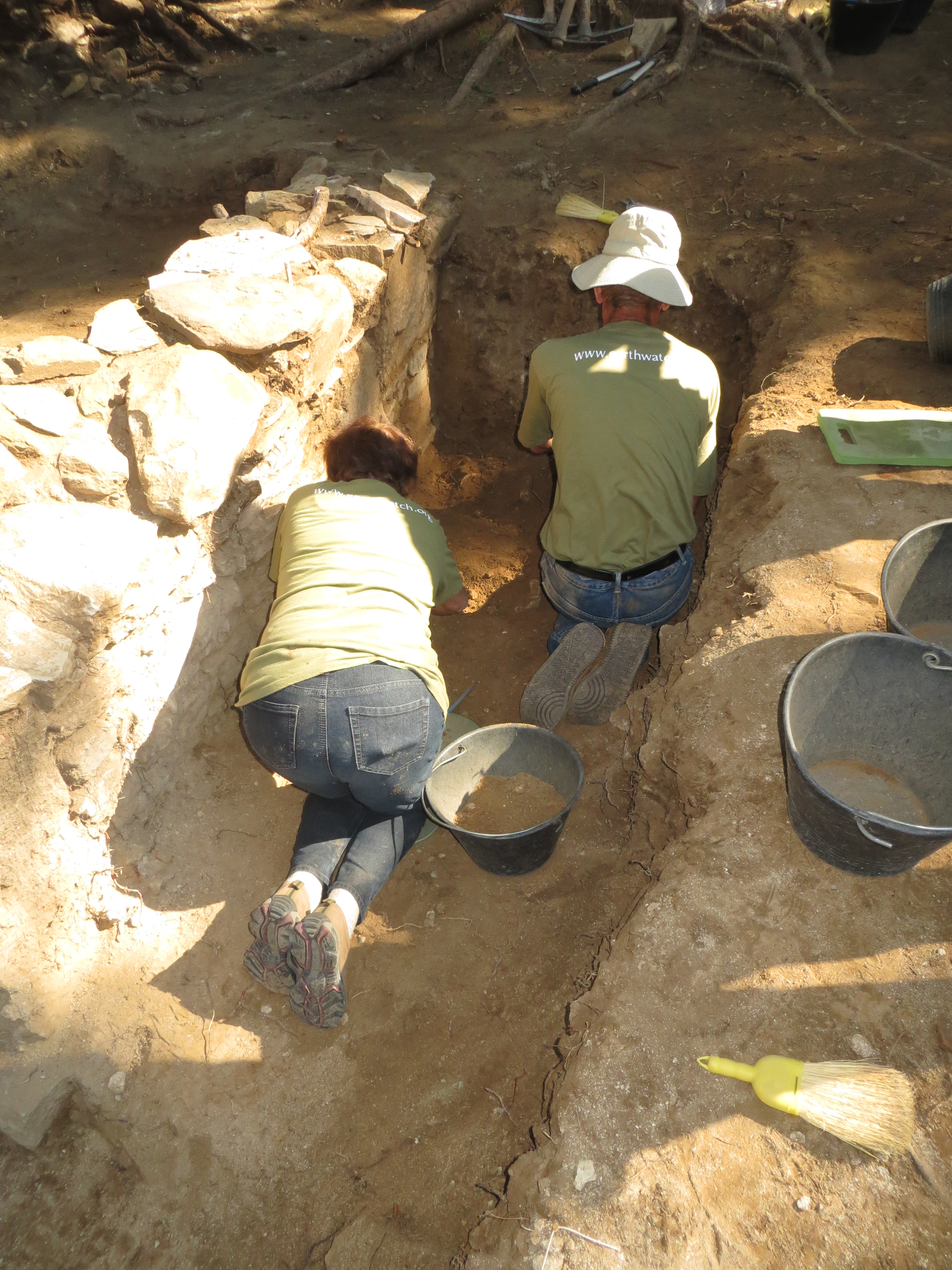
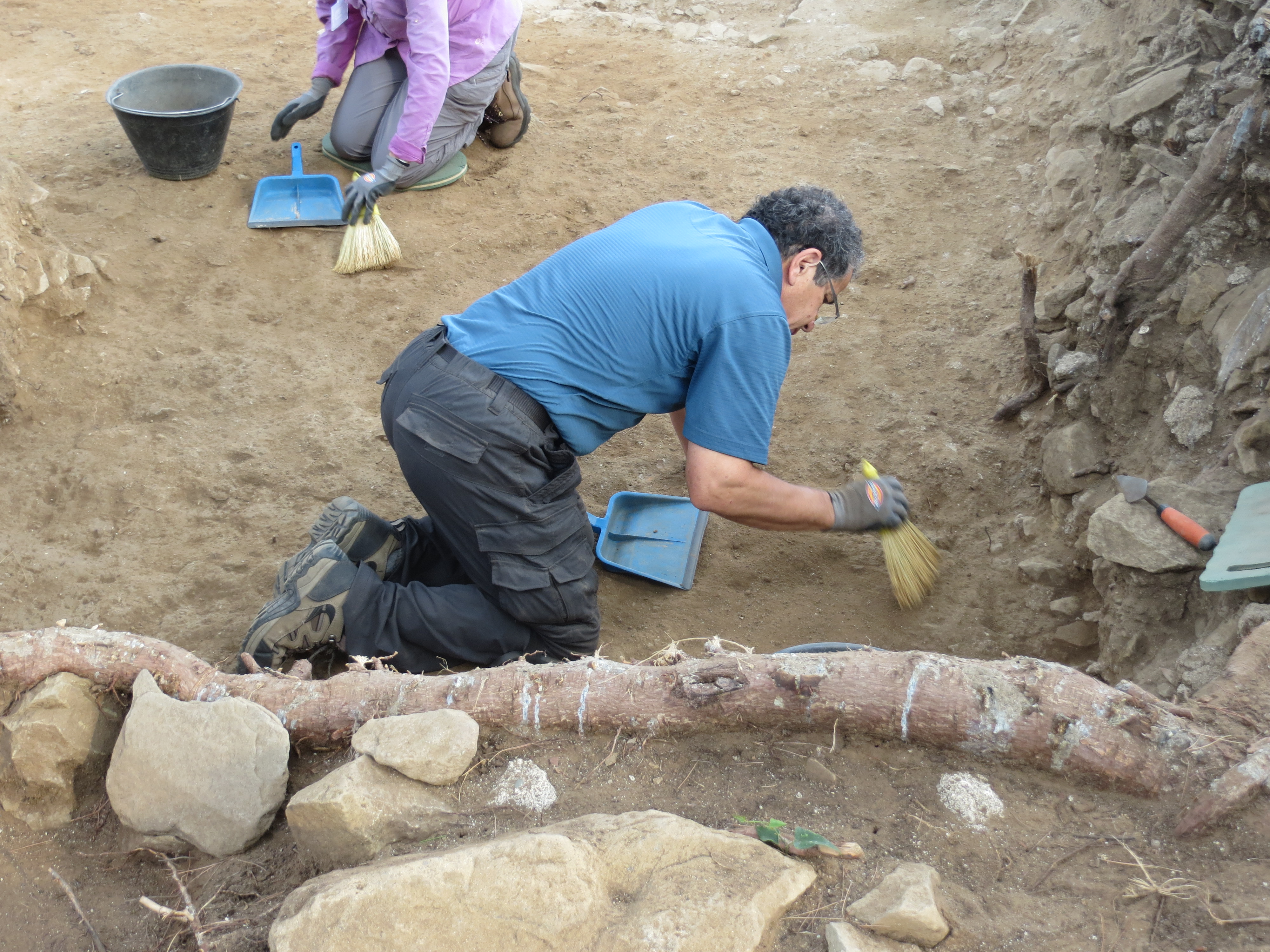
The work at Poggio del Molino consisted of carefully excavating the designated area around the walls of the villa/fort, supervised by the staff.  The basic daily tools were gloves, a small trowel, a hand brush, a dustpan, a bucket and knee pads.  At the start, the ground was loosened up with a pick, then we set to removing the exposed rocks & soil by hand sweeping the soil into a bucket, and picking up the larger stones and roof-tiles.  The staff oversaw our efforts and checked carefully for interesting artifacts and signs of a new ‘layer’, indicating another strata of history.  It was slow work on our hands and knees shifting the soil & rocks into the buckets while others were slinging the full buckets over to the waiting wheelbarrows and hauling them up to the dump just outside the site’s fence.

Europe_2014 10 09_1157 Europe_2014 10 08_1213 Europe_2014 10 08_1217 Europe_2014 10 07_1242 Europe_2014 10 05_1255Europe_2014 10 03_1379Europe_2014 10 03_1377   Europe_2014 10 03_1384   Europe_2014 10 01_1447Europe_2014 09 30_1471Europe_2014 09 30_1468Europe_2014 09 29_1509Europe_2014 10 02_1429Europe_2014 10 02_1427 Europe_2014 10 01_1462

27 September Pisa Italy

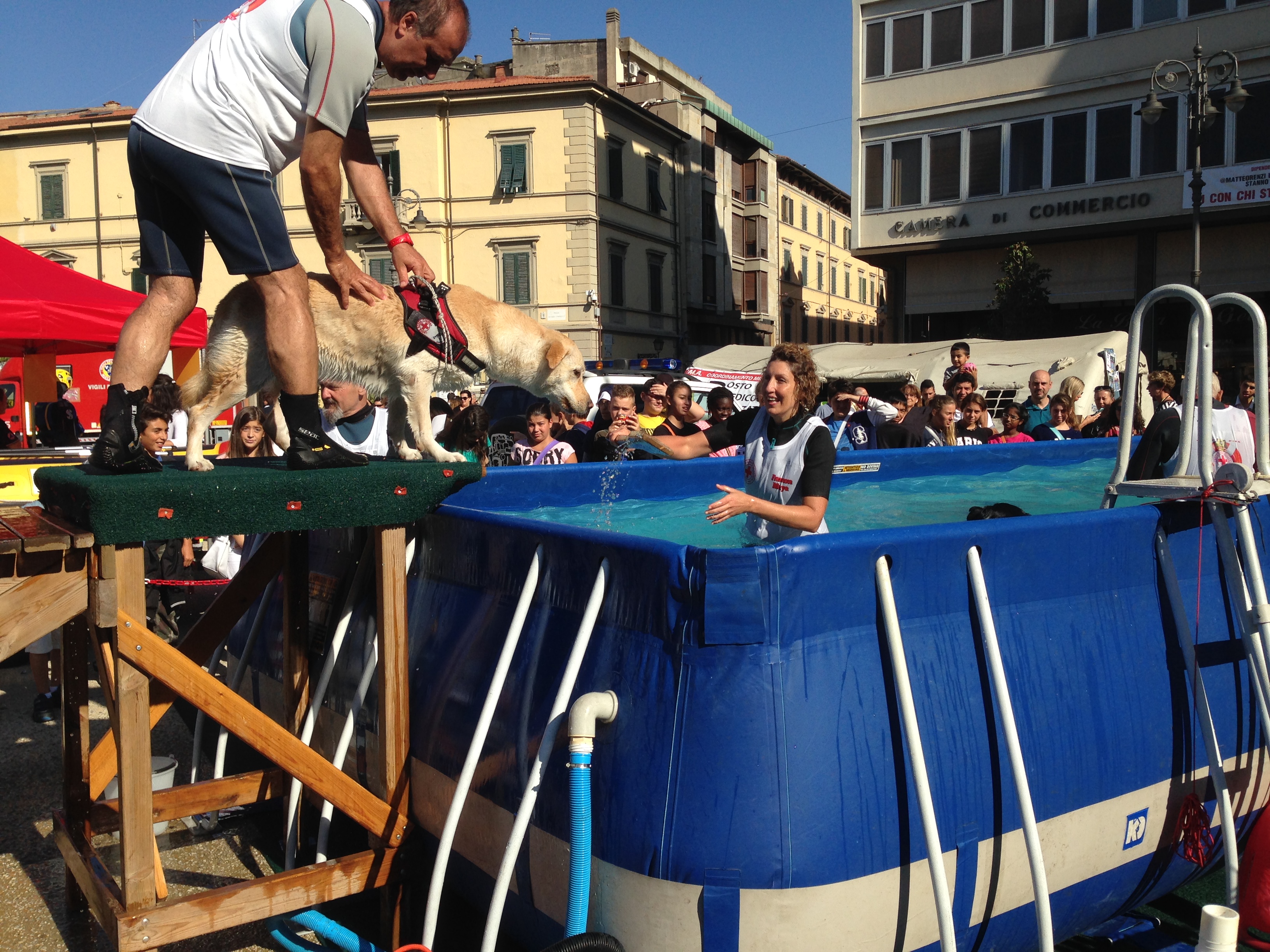
On Saturday 27-Sept we got a 5am taxi from Aspley Guise, UK  to Luton London airport and flew into Pisa by EasyJet, arriving about 10am. We left our bags at the quiet Hotel Alessandro della Spine. The first thing we encountered was a demonstration of life saving dogs in a large plaza, which was part of an exhibition of police and military civilian activities. Later we went (of course) to the famed tower with its fabulous lawn and made with the usual photos.
We stayed in Pisa for one night and took the train the next day to Campiglia Marittima station where we were picked up by the Earthwatch research team and taken to the townhome apartment in Populonia Stazione to bunk during our participation in the dig at Poggio del Molino.

IMG_1703Europe_2014 09 27_1532 IMG_1716